 33% off
High Quality Fast-Growing Radish Seeds
High Quality Radish Seeds — Fast-Growing for Home Gardens Radish is one of the fastest and easiest root…
1.000 JOD
1.500 JOD
In stock and ready to ship

0.000 JOD
 Media gallery
Enter your email address and we will contact you when the product is available again.

1.000 JOD
Read the instructions and precautions before use.
Genuine seeds suited to Jordan's cool winter climate, with quick germination in 7–12 days and harvest after 90–120 days. Ideal for garden beds and large pots.
Contents: Specifications • Planting calendar for Jordan • Planting guide • Feeding programme (HEDERA) • Pests, diseases and treatment • Frequently asked questions
| Botanical name | Vicia faba (Broad/Fava Bean) |
|---|---|
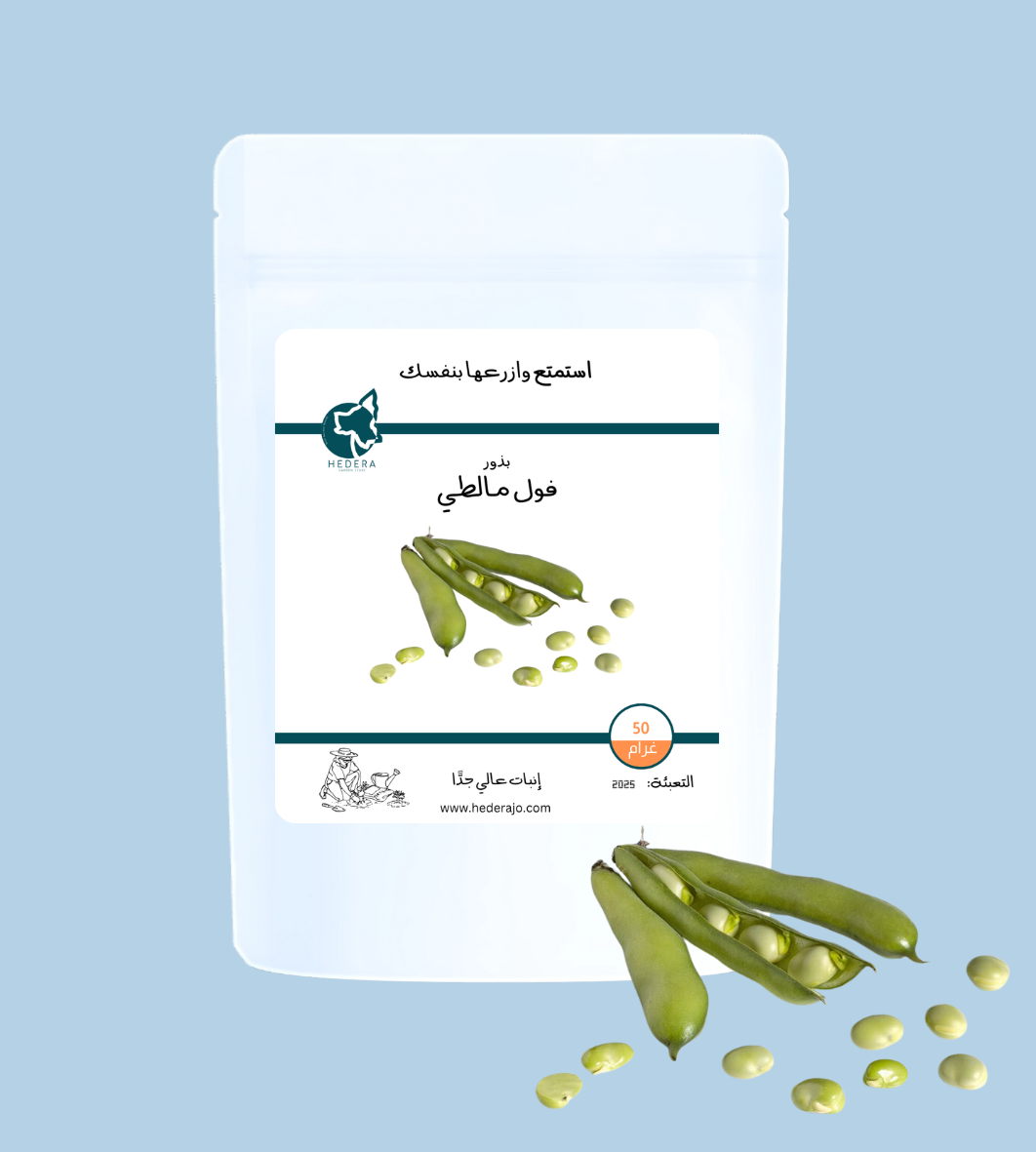
| Variety | Maltese fava bean — Mediterranean culinary variety |
| Net weight | 50 g (≈ 25–35 seeds; enough for 15–25 planting stations) |
| Germination | 7–12 days |
| Harvest | After 90–120 days, depending on temperatures |
| Sunlight | 5–7 hours of direct sunlight |
| Soil | Well-drained loam or sandy loam with organic matter |
| Container growing | Yes. A 25–30 L pot for every 2–3 plants |
| Region | Planting window | Notes |
|---|---|---|
| Jordan Valley (north/central) | October–November | Mild winter conditions and an early harvest |
| Amman, Salt, Jerash and Irbid highlands | November–December or late January–February | Avoid flowering during high temperatures (>25°C) |
| Southern highlands | November, then February | Depending on the severity of cold and frost |
The following rates are per 10 L of water. Always follow the product label.
| Stage | Timing | Product | Rate | Application |
|---|---|---|---|---|
| Establishment after germination | 10–14 days after germination | Hedera NPK 20-20-20 | 5 g/10 L | Watering or spraying every 10–14 days |
| Before flowering | At 30–40 days | Hedera Calcium-Boron | 3–5 ml/10 L | Foliar spray to improve pod set |
| Flowering and pod set | When flowers appear | Hedera NPK 12-12-36 | 5 g/10 L | Every 10 days (higher potassium for pod quality) |
| Pod filling | Ongoing | EDDHA chelated iron | 2–3 g/10 L | Spray when interveinal yellowing appears |
| Supporting nutrient uptake | Every 3–4 weeks | Hedera humic/fulvic acids | As directed on the label | Add to irrigation water to improve nutrient uptake |
| Problem | Symptoms | When it occurs | Action | Suggested product |
|---|---|---|---|---|
| Aphids | Curled leaves, honeydew and ants | From vegetative growth to pod set | Treatment spray and pinching out the tips after the first pods set | ASTRO or an alternative pesticide for piercing and sucking pests, according to the label |
| Pod worms/borers | Holes and damaged seeds inside pods | After flowering | Monitoring traps and spraying when the action threshold is reached | A pesticide suitable for lepidopteran larvae |
| Powdery mildew | A white powdery coating on leaves | Moderate humidity and shade | Ventilation and preventive or curative fungicide spraying | Micotan |
| Root rot | Yellowing, wilting and brown or decaying roots | Poor drainage or cold soil | Improve drainage and treat the soil | Mov Hemixazol |
⚠️ Follow the label of each pesticide or fertilizer, including application rates, frequency and pre-harvest intervals.
| Week | Task |
|---|---|
| 0 | Sow 5–7 cm deep and water after sowing |
| 1–2 | Maintain moderate soil moisture and watch for aphids |
| 3–4 | First 20-20-20 feeding and light hoeing |
| 5–7 | Provide light support and start Calcium-Boron before flowering |
| 8–10 | Switch to 12-12-36 and pinch out the tips after the first pods set |
| 11–14 | Targeted control when needed (Botrytis/aphids) |
| 12–16 | Harvest tender pods gradually |
Can I grow them on a balcony?
Yes. Use a 30–40 L pot with 2–3 plants per pot, 5–7 hours of sunlight and light support.
Why is flowering delayed or pod set poor?
Late sowing or high temperatures during flowering are common causes. Autumn or early winter is the best planting time.
What causes brown spots on leaves and flowers?
This may be Botrytis (chocolate spot). Improve ventilation and use a suitable fungicide according to the label.
Storage: Keep seeds in a cool, dry place away from sunlight. Non-returnable once opened.
SKU: HED-SEED-FABA-50 • Climate suitability: Jordan/Eastern Mediterranean
Complementary products to help you put your solution into practice.
33% off
High Quality Radish Seeds — Fast-Growing for Home Gardens Radish is one of the fastest and easiest root…
 33% off
High Quality Red Beetroot Seeds for Home Gardens Red beetroot is a nutritious root vegetable rich in iron,…
 33% off
Growing Parsley at Home — A Nutritious, Easy-Care Herb 1 - About the Plant Parsley is a popular…
Choose the right contact to start a conversation.