

Green ZZ Plant — 100 cm
A tall, full green ZZ plant with glossy leaves arranged along upright stems. Its tidy shape adds an…
23.000 JOD
In stock and ready to ship

0.000 JOD
 Media gallery
 Media gallery
 Media gallery


Enter your email address and we will contact you when the product is available again.

8.000 JOD
Read the instructions and precautions before use.
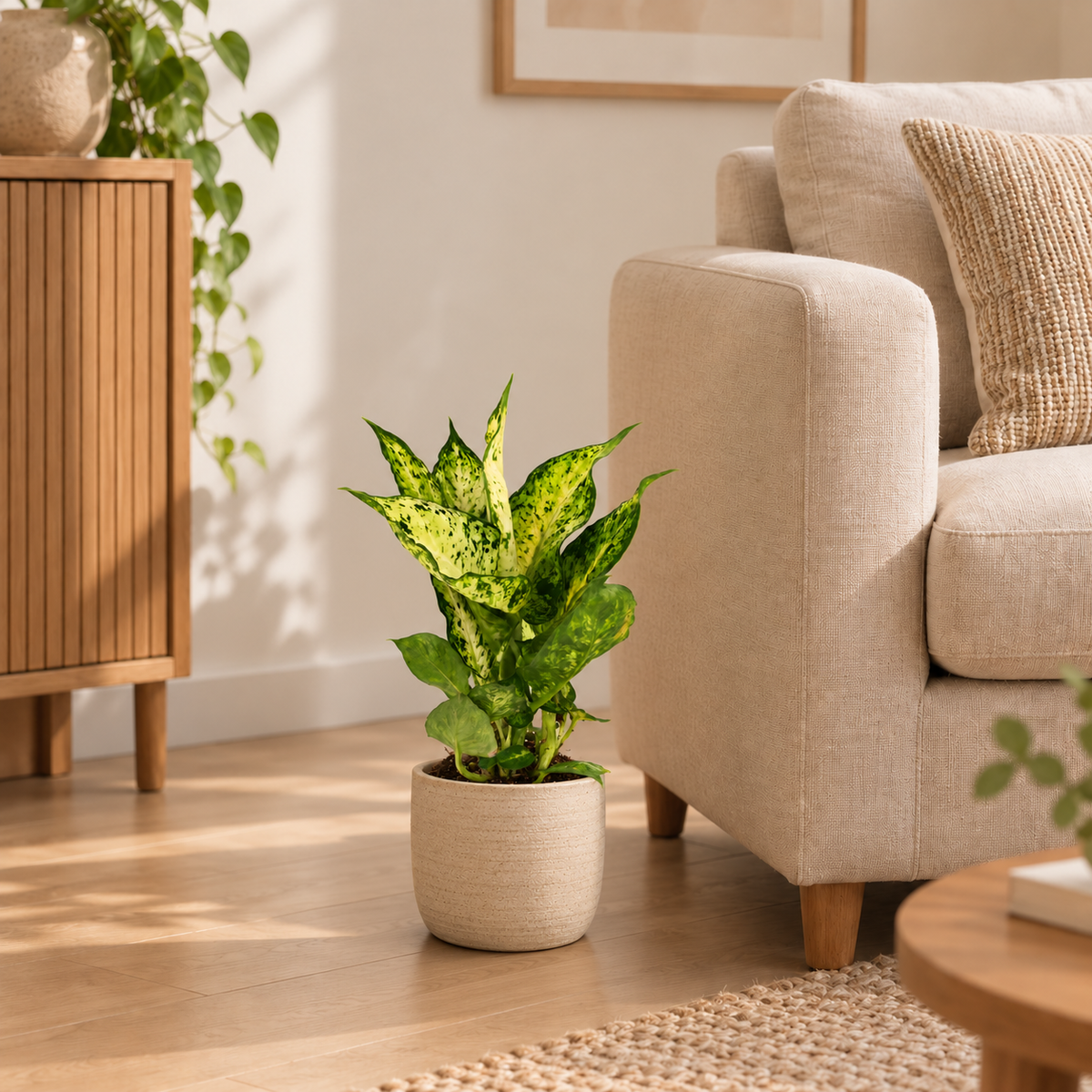
Broad leaves in shades of green with pale markings give this compact Dieffenbachia a strong presence. At just 25 cm tall, it suits desks, side tables, shelves and small indoor spaces, adding lush foliage without taking up much room.
The decorative planter shown in some photos is not included. Variegation, leaf number and growth direction may differ slightly, as each plant grows naturally.
Prefers bright, indirect light to maintain clear variegation. Adapts to medium light, but very low light slows growth. Avoid direct midday sunlight.
Water after the top 2–3 cm of soil has dried. Water thoroughly until excess drains from the holes, then discard the collected water. Check the soil regularly, as a 12 cm pot may dry faster than larger pots.
Suits moderate household humidity and benefits from somewhat higher humidity. Keep away from cold draughts and direct air-conditioning airflow. Prefers temperatures of 18–27°C.
Use a light, rich, well-drained potting mix. Apply a balanced houseplant fertiliser at moderate strength every 4–6 weeks during active growth, reducing feeding in winter.
Gently wipe with a soft, damp cloth to show the leaf colours clearly. Avoid artificial leaf-shine products.
Provide good indirect light and allow the upper soil layer to dry slightly between waterings. If new leaves lose their variegation or growth slows, check the light before increasing fertiliser. Several yellow leaves combined with constantly wet soil may indicate overwatering or poor drainage.
Dieffenbachia contains insoluble calcium oxalate crystals. Chewing the leaves or stems may cause irritation, pain and swelling of the mouth and tongue. Keep away from children, cats and dogs. The sap may irritate skin or eyes, so wear gloves when pruning and wash your hands after handling cut plant parts.
Do not increase watering simply because this is a tropical plant. Air humidity helps, but does not mean the soil should stay constantly wet. Check the soil first; if it is still moist, wait before adding water.
Yes. Its 25 cm height and 12 cm pot make it well suited to desks, tables and small spaces with appropriate light.
No. Bright, indirect light is better; strong sunlight may scorch the leaves.
There is no fixed interval. Check the top 2–3 cm of soil and water when it starts to dry.
Possible causes include overwatering, poor drainage or natural ageing of an older leaf.
No. Keep it in its nursery pot while growth and drainage are good. Move up just one pot size later when the roots become crowded.
Complementary products to help you put your solution into practice.
A tall, full green ZZ plant with glossy leaves arranged along upright stems. Its tidy shape adds an…


A flowering orange Guzmania with vibrant orange and yellow tones and neatly arranged green leaves. Its tropical appearance…


Red Flowering HouseplantA flowering houseplant with a vivid red flower head and glossy green leaves arranged around the…
Choose the right contact to start a conversation.