Your garden cabbage starts with a small seed. Hedera's 1 g pack of green cabbage seeds produces seedlings that grow into heads of tightly packed leaves, suitable for a home garden or spacious planting beds. Cabbage prefers mild to cool weather, with the best results when growth stays steady from the seedling stage until the head fills out.
Quick Growing Facts
- Crop: Green cabbage.
- Pack weight: 1 g of seeds; the seed count varies with seed size and packing batch.
- Season in Jordan: Generally autumn and winter. Choose seedling timing according to local temperatures and the variety; the Jordan Valley's planting times differ from those in the highlands.
- Site: Direct sun and fertile, well-drained soil, preferably rich in organic matter.
- Sowing depth: About 0.5–1 cm.
- Spacing after transplanting: About 40–50 cm between plants and 60–75 cm between rows. Large-headed varieties may need more space.
Growing Cabbage from Seed, Step by Step
- Choose the right time: Start seedlings as the heat eases, so the plants continue growing and heads form in mild weather. A crop can be grown at other times if the variety and conditions are suitable, but avoid exposing young seedlings to severe heat or cold spells.
- Prepare the seedling tray: Fill cells with clean, well-drained growing medium, placing a seed in each cell at a depth of 0.5–1 cm. Moisten gently and keep moist without waterlogging. Seedlings may emerge in about 5–20 days, depending on temperature and seed quality.
- Raise strong seedlings: Provide sufficient light and good ventilation. Transplant after 4–6 true leaves and good roots develop, often in about 5–7 weeks depending on seedling conditions. Gradually acclimatise them to outdoor conditions before moving them, and avoid leaving them too long in a cramped tray.
- Transplant into the ground: Mix in mature compost if the soil needs improvement. Plant deeply enough to cover the root ball, leaving about 40–50 cm between plants and 60–75 cm between rows. Water immediately after transplanting. In a container or bed, allow enough space for each head instead of crowding seedlings together.
- Water and feed regularly: Maintain even moisture around the roots, especially during early growth and head formation. Water deeply as needed and check the soil instead of following a fixed number of waterings; needs change with weather and soil type. Prepare the soil with suitable nutrients. An additional nitrogen feed may be applied during leafy growth according to fertility, but avoid excess nitrogen once the head begins to form.
- Monitor and harvest: Check leaves, particularly their undersides, to spot aphids and cabbage caterpillars early. Cut the head when full and firm under pressure, before it begins to split, keeping some outer leaves to protect it. Maturity time varies by variety.
Tips from Hedera's Agricultural Engineer
- Place clean plant-based mulch around seedlings to help retain moisture and reduce weeds, keeping the area immediately around the stem clear.
- Avoid planting cabbage in the same place after cauliflower, broccoli or other brassicas. Crop rotation reduces pest and disease build-up.
- Irregular watering near harvest may contribute to heads splitting. Harvest a head when it reaches a suitable size instead of leaving it in the ground too long.
Frequently Asked Questions
Can cabbage seeds be sown directly into the soil?
Yes. They can also be started in seedling trays and transplanted later. Starting seedlings helps protect young plants and monitor their growth in a home garden.
Why is the cabbage not forming a firm head?
Head formation may be delayed by unsuitable temperatures, overcrowding, irregular watering or feeding, or damage to the young plant's growing point. Check the growing conditions first, and do not add large amounts of fertiliser indiscriminately.
How do I know when cabbage is ready to harvest?
The head should be full and firm to the touch. Harvest before it splits, and do not rely on a fixed number of days without knowing the variety and growing conditions.
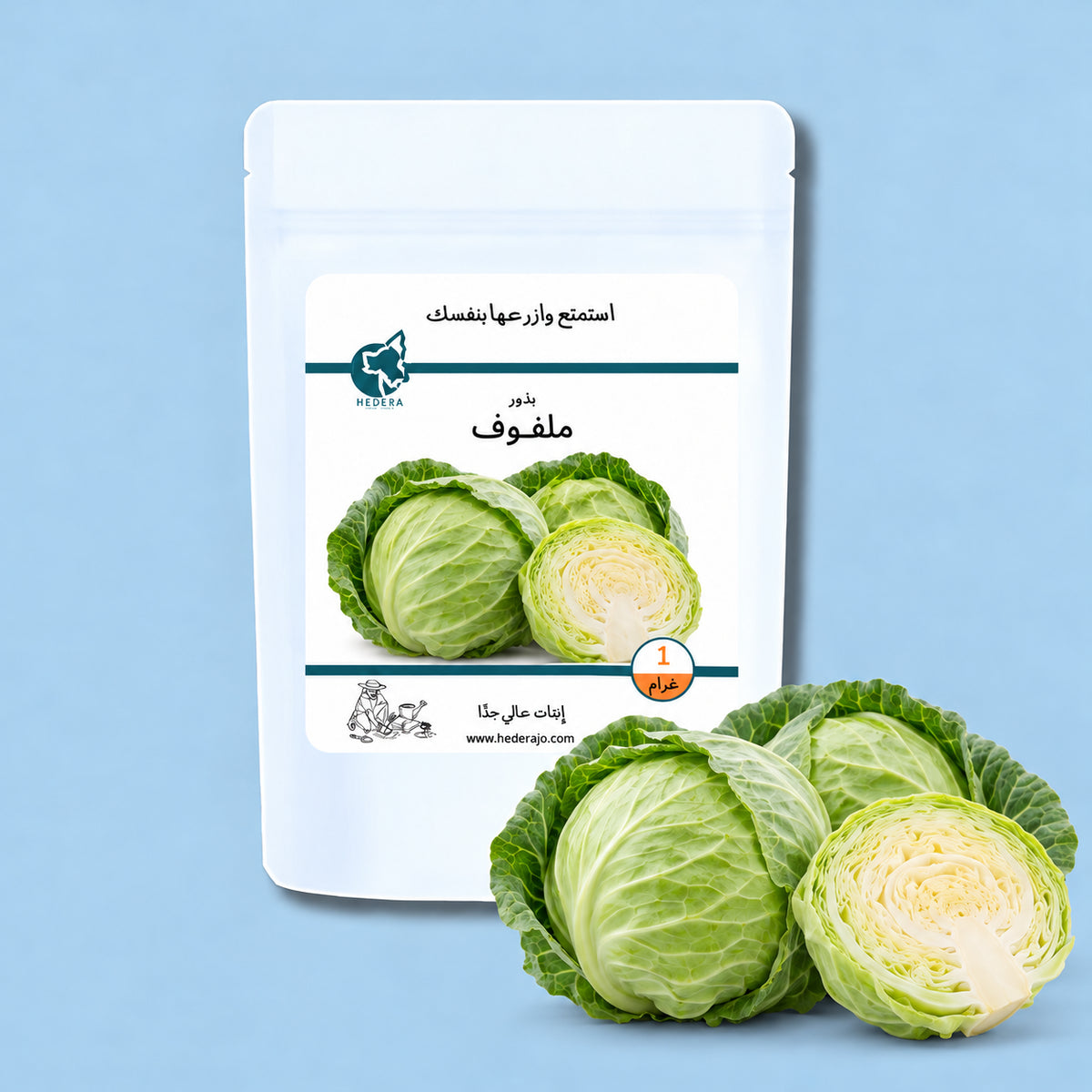
Note: The image of the heads is illustrative. Head shape, size and maturity time depend on the variety, care and weather.
 33% off



 33% off
 33% off