
 25% off
High Quality Red Cabbage Seeds
Selected red cabbage seeds for firm, densely leafed heads with a deep purple colour rich in anthocyanins, adding…
1.500 JOD
2.000 JOD
In stock and ready to ship

0.000 JOD
 Media gallery
Enter your email address and we will contact you when the product is available again.
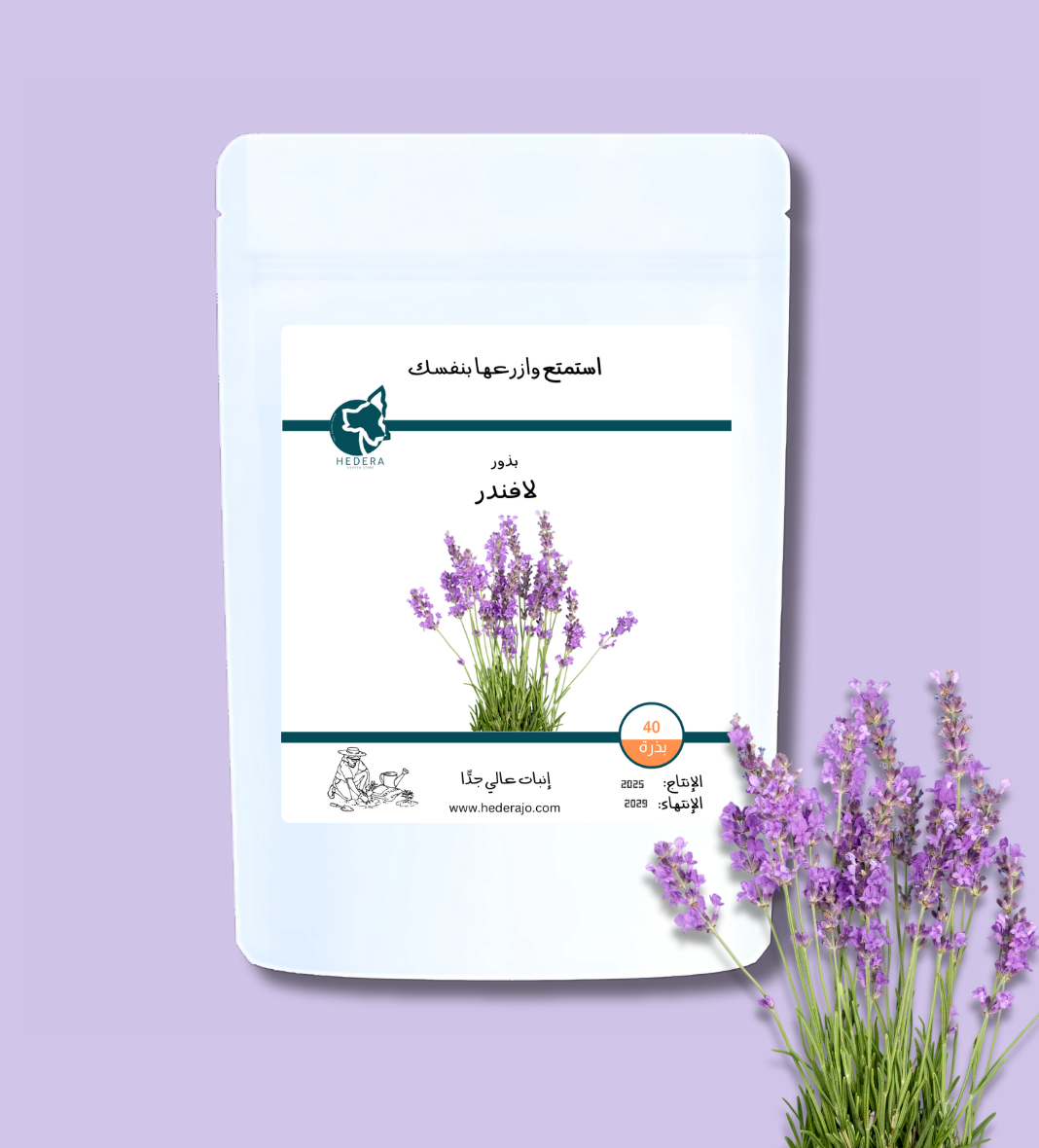
1.000 JOD
Read the instructions and precautions before use.
Lavender (Lavandula spp.) is an evergreen perennial herb known for its strong fragrance and beautiful purple flowers. It is used in essential oils, cosmetics and natural remedies, and is also grown for decoration, to attract bees and to improve the surrounding environment.
Lavender can be grown from seed and requires raising seedlings for transplanting.
Keep the soil lightly moist, without saturating it.
Harvest flowers as they begin to open for the highest essential oil content. Cut stems with sharp pruning shears and dry them in the shade to preserve their quality.
| Timing | Fertilizer and Rate | Purpose |
|---|---|---|
| 10 days before planting | 3–5 kg organic fertilizer per square meter | Improve soil fertility |
| 10 days before planting | 50–80 g calcium superphosphate per square meter | Promote root growth |
| One month after planting | 5 g calcium nitrate per square meter | Support growth |
| During flowering | 10 g NPK 5-10-10 per square meter | Encourage flowers |
| After harvest | 5 g potassium sulfate per square meter | Strengthen plants |
Lavender is an aromatic, drought-tolerant perennial that is easy to care for and suited to home gardens and commercial farms. Balanced watering, suitable fertilizing and pest care can support plentiful, high quality flowers.
Complementary products to help you put your solution into practice.
25% off
Selected red cabbage seeds for firm, densely leafed heads with a deep purple colour rich in anthocyanins, adding…
 33% off
Growing Compact Ornamental Basil at HomeThis compact basil is not for eating and is intended for ornamental use.1.…
 33% off
Mulukhiyah for Home GardensMulukhiyah, also known as jute mallow, is a popular leafy vegetable in Arab cooking. These…
Choose the right contact to start a conversation.